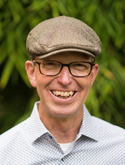
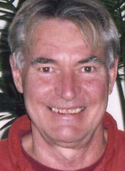
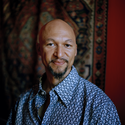
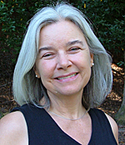
John Martin teaches Vipassana (Insight) and Metta (Loving Kindness) meditation retreats. He leads an on-going weekly Monday evening meditation group in San Francisco, and an Advanced Practitioners Program group. He serves as Co-Chair of the Guiding Teachers Committee for Spirit Rock, and serves on the Executive Committee of the Board of Directors. John is also the co-guiding teacher for the LGBTQueer Sangha at the Insight Meditation Center in Redwood City.
John is currently leading a year long Satipitthana Intensive Practice program and will be on the teaching team for the two year Spirit Rock Dedicated Practitioners Program that will begin in the Spring of 2022.
In his prior work life, John served as Airport Director of SFO for over twenty years. He had a career committed to public service.
His practice has been supported by twelve years as a hospice volunteer: including five years at Shanti Project during the AIDS crisis, and seven years with the Zen Hospice projects.
After thirty-five years of experience around the dharma, with eight of these years in Asia, I am still deeply inspired, as a teacher, by students' progress with the practice. I see the questioning I do with myself reflected in others. The infinite loop of my practice and my teaching becomes a self-fulling prophecy. As I see others letting go of old baggage, it inspires me to continue questioning myself.
My teachings, for I am not a scholar, come from my experience on the pillow. In the first ten years of the practice, I worked on the pain of life, the confusion, how to gain clarity. In the next ten, I was finding balance in non-attachment; being in life, but not wanting to enter life. In the last ten, I've been learning how to engage with the stickiness of living and loving. I ask, how kind are people to each other? How can we find a place inside that is not afraid anymore?
We need to know what drives us and our minds, how to relieve the cultural anxiety all around us. We need to stop and slow down, to start feeling. But the dharma not just a stress reduction course; the teachings point directly toward the nature of human conditioning and our freedom.
Overall, my teachings are very much about self-acceptance, giving ourselves space to do the practice and find our own voice. My intention is to give people permission to listen to themselves, to become friends with themselves. Ultimately, this moment is enough, we're enough, and don't need to be anything other than we are.
Johnathan Woodside is a Dharma teacher offering instruction rooted in the Theravāda tradition of ethics, concentration, and wisdom. He has been teaching since 2011 and is the founder and guiding teacher of Mindfulness Outreach Initiative in Omaha, Nebraska, and Dallas Insight Sangha in Dallas, Texas. His teachings emphasize the direct experience of the Dharma, encouraging students to cultivate insight through dedicated practice grounded in mindfulness, introspection, and the development of liberating wisdom.
I have two main aims in teaching. The first is to spread the dharma as widely as possible, offering it to as many different people as I can. The second is to teach a smaller number of people over sustained periods of time. This in-depth teaching engages my tremendous love for intensive, long-term meditation practice, where people can immerse themselves in the retreat experience and see how it transforms their understanding.
Although deeply rooted in the Vipassana tradition of Theravada Buddhism, I enjoy working with various skillful means from different Buddhist schools to help convey the essence of all practice, the one dharma of liberation. This essential dharma includes the wisdom of non-clinging, the motivation of compassion to practice for the benefit of all beings, and the potential for liberation within us all.
Given the speed and complexity of our culture, the Buddha's teachings offer a much-needed means to slow down, a way to create some inner calm. We need to touch base with this place of tranquillity in order to allow our bodies and minds to unwind. We then have the chance to see more deeply and profoundly the nature of our lives, how we create suffering and how we can be free. The dharma begins with the development of calm and it carries us all the way to liberation.
joshua bee alafia’s meditation practice began in 1989 when his mother gave him a mantra to work with. This sparked a rich journey into different styles from the Hawaiian Shamanic, Hindu, Sufi, Dzogchen, Taoist, and Vipassana traditions. Wanting to bring Vipassana practice to the youth, he began teaching mindfulness practice to incarcerated, court involved and system vulnerable youth through New York’s Lineage Project in 2010. He is a graduate of the Community Dharma Leaders training through Spirit Rock Meditation Center. He currently teaches mindfulness meditation with South Side Insight in Chicago and Taoist Meditation with Immortal Arts Chicago. He is the founder of Liberation Center Worldwide, building meditation/wellness centers internationally and the founder and co-executive director of South Side Liberation Center in Chicago.